
Song for a Whale by Lynne Kelly
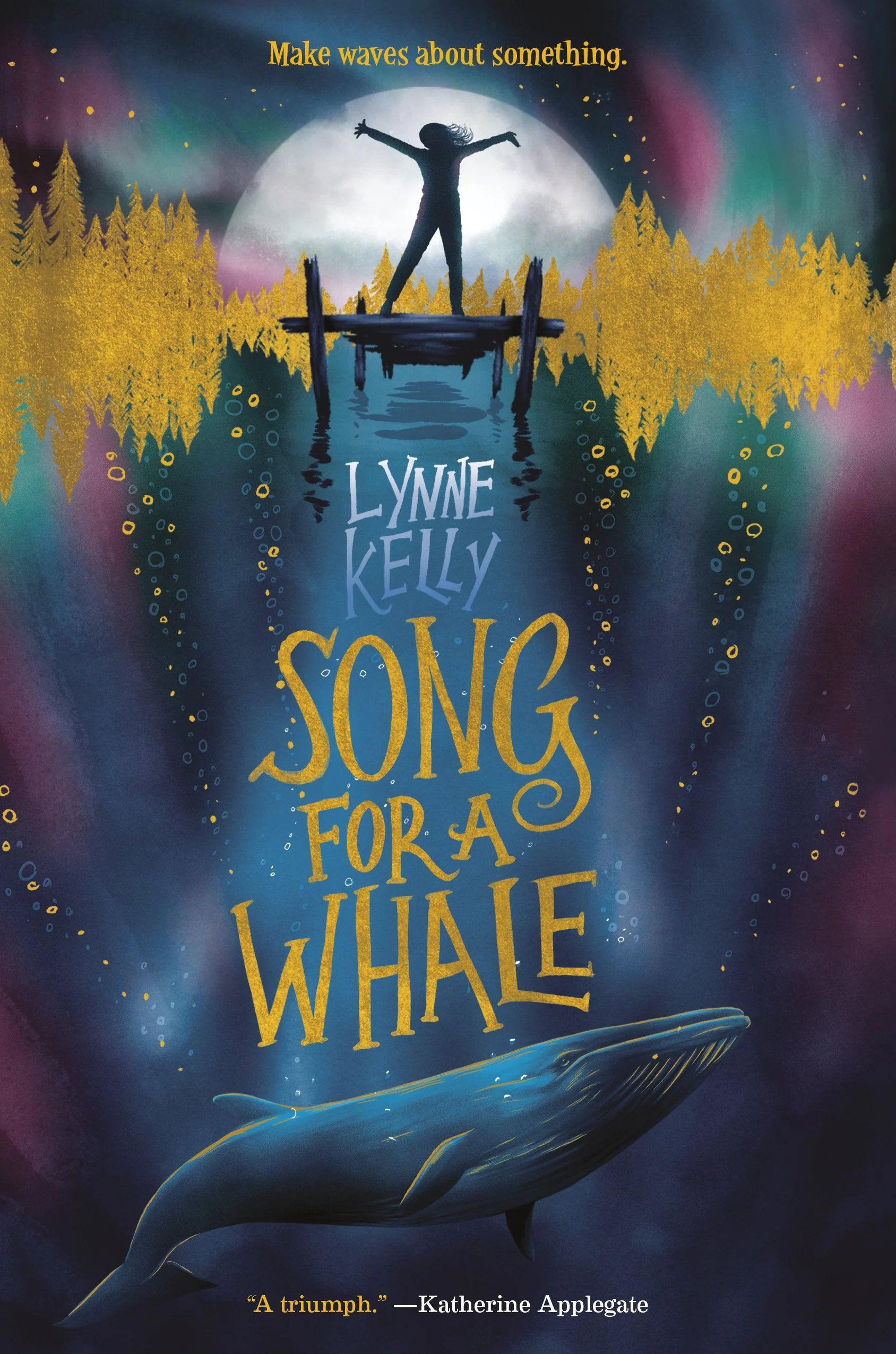
Book summary
Twelve-year-old Iris has a talent for fixing things. She can bring old radios back to life and solve problems that leave others puzzled. But as the only Deaf student at her school, she often feels misunderstood. The people around her don’t always recognize her abilities or make the effort to communicate with her.
When Iris learns about Blue 55, a whale whose unusual song makes it difficult to communicate with other whales, she feels an immediate connection. Determined to help him, she puts her knowledge of sound and technology to work creating a song he can recognize. Reaching a whale thousands of miles away, however, will take more than a clever invention.
Song for a Whale follows Iris on an adventure that brings new challenges, unexpected connections, and opportunities to speak up for herself. Through her story, Lynne Kelly invites readers to consider what it means to understand someone—and how we can help one another feel heard, valued, and included.
Discussion questions
Before reading
Look at the title and cover. What kind of connection might a person and a whale share?
What helps you feel understood? How can people communicate without speaking aloud?
After reading
Use examples from the story to support your answers.
Why does Iris feel connected to Blue 55? In what ways are their experiences similar, and in what ways are they different?
How do Iris’s skills with electronics shape her plan? What do those skills reveal about her that other people might overlook?
Choose a moment when someone makes an assumption about Iris. How does that assumption affect her, and what could the person have done differently?
Compare two relationships in Iris’s life. What helps her feel understood in each one? Where does communication break down?
Choose a difficult decision Iris makes. What motivates her? What are the consequences, and would you have made the same choice?
How does Iris’s understanding of belonging change? What does the ending suggest about what it takes to connect with someone?
Vocabulary
Suggested words to explore alongside the book.
Frequency
How many times something repeats in a set period; for sound waves, the number of vibrations each second.
Pitch
How high or low a sound seems. Higher-frequency sounds generally have a higher pitch.
Vibration
A repeated back-and-forth movement that can travel through a material.
Hertz (Hz)
A unit of frequency equal to one cycle per second.
Communication
Sharing information or meaning through language, signs, images, or other signals.
Assumption
Something accepted as true without checking whether it is.
Perspective
A person’s way of seeing or understanding a situation.
Belonging
A feeling of being accepted, valued, and included.
Try it: Choose three words. Explain each in your own words, then connect it to a character, event, or idea from the novel.
Putting it all together
Choose one assignment after finishing the book.
1. What does it mean to be understood?
Create a one-page response, a short slide presentation, or a captioned video answering that question through Iris’s story.
State a clear idea about what the novel says about being understood.
Use three moments from the story—one from the beginning, middle, and end.
Explain how each moment supports your idea and shows Iris changing.
Finish with one way a classroom, family, or book club could put that lesson into practice.
Include: Your main idea, three examples with chapter or page references, and a concluding reflection.
2. Design a more welcoming book club
Plan a book-club meeting where people can participate in different ways. Start with a communication barrier Iris encounters, then apply what you learned to your design.
Describe the barrier and connect it to a specific scene.
Plan at least three ways to support participation—for example, shared written questions, clear turn-taking, and a choice of written, signed, or spoken responses with the support each person needs.
Explain how you would ask participants what works for them.
Sketch the meeting setup or create a one-page plan. Explain how each choice helps people contribute.
Include: Your plan or sketch, a connection to the book, and a brief explanation of your choices.
